The Documentary
In the wilds of Newfoundland and Labrador, a predator once roamed that no longer exists: the Newfoundland wolf, extinct for over a century. The Rise and Fall of the Alpha resurrects its presence not through reconstruction, but through connection: a biometric interactive installation where participants' own heartbeats, breath, and movement bring a vanished species back into shared space, alongside the critically endangered Atlantic wolffish still struggling to survive today.
An intimate 26-minute documentary, the project traces the threads between ecological loss, Indigenous knowledge, and the quiet, mounting cost of disconnection from the natural world. Blending biometric technology, real-time animation, and grounded storytelling, The Rise and Fall of the Alpha asks a simple but urgent question: what does it take for us to feel what we've already lost, before it's too late to feel what we still might save?
Created by Julie Lewis, with international development partnerships in New Zealand and the United States, the project bridges art, science, and ancestral knowledge into a single, beating pulse.
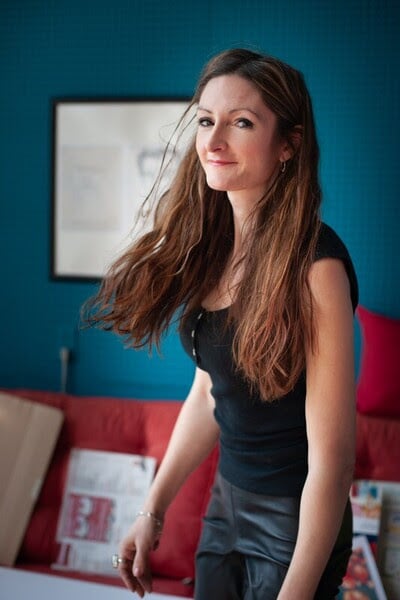
Julie Lewis is a Newfoundland-based filmmaker, artist, and creative director whose career spans over two decades at the intersection of animation, visual art, and immersive technology. Beginning in animation in 2002, Lewis built her craft through collaborations with some of the industry's most distinctive studios, including Spumco, Boomstone Animation, CBC, and Disney Channel, developing a rigorous eye for character, movement, and storytelling that would anchor everything that followed.
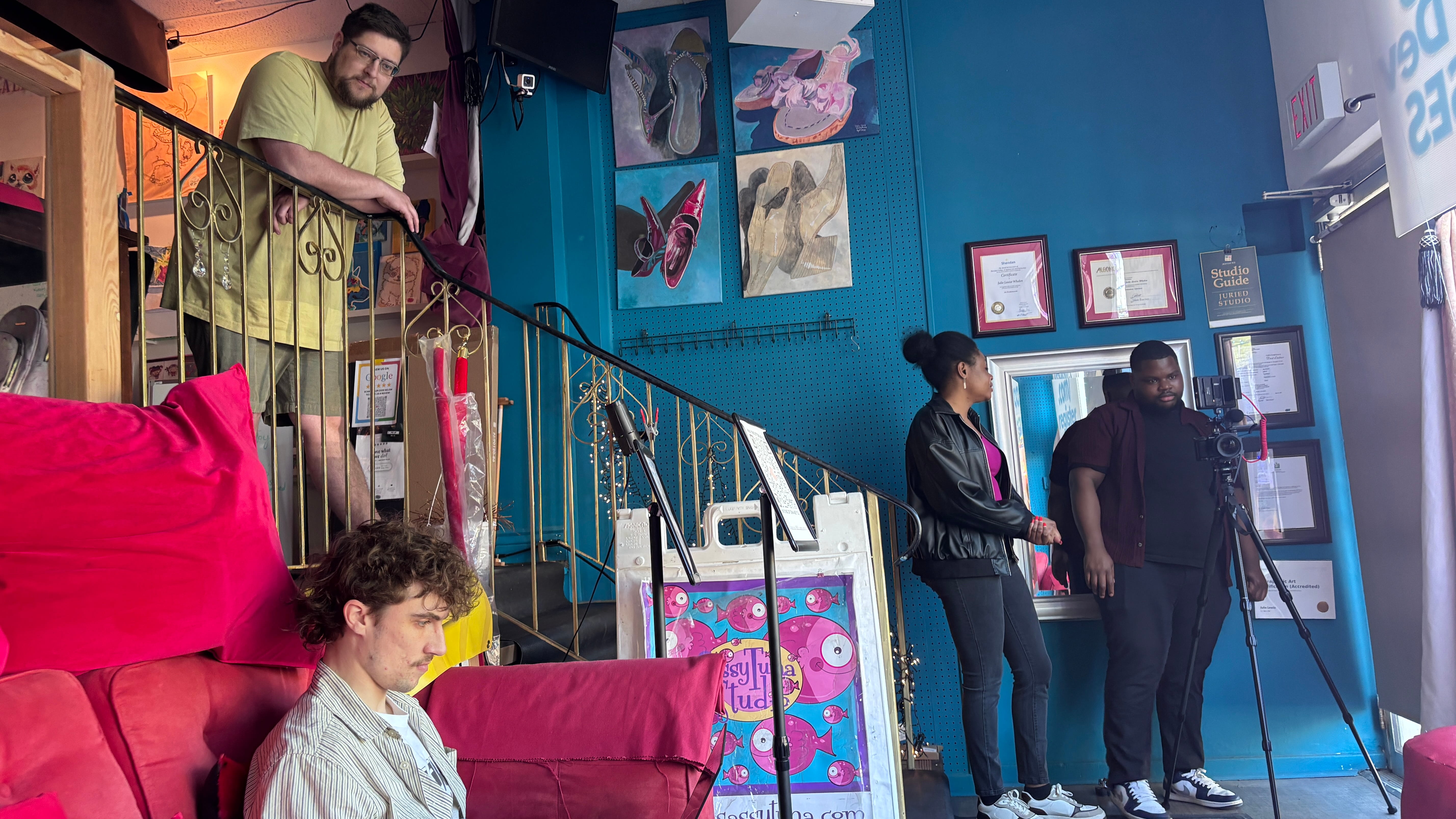
From industry, Lewis continued her practice toward technology and fine arts, deepening her exploration of how images move people, literally and emotionally. That inquiry eventually led her to found Sassy Tuna Studio® in St. John's, Newfoundland and Labrador, a multidisciplinary creative studio and makerspace where ecological advocacy, community arts education, and cutting-edge interactive technology share a single roof.Her current work sits at the frontier of biometric interactive art, creating live, physiologically responsive installations where audiences don't simply watch a story unfold, but become part of it through their own heartbeat, breath, and presence. Her flagship projects, Beta: The Sensory Wolf and The Rise and Fall of the Alpha, explore human disconnection from the natural world through the lens of species extinction, Indigenous knowledge, and real-time data, drawing on the story of the Newfoundland wolf, hunted to extinction in the early twentieth century, and the critically endangered Atlantic wolffish.
Lewis has been supported by ArtsNL, Canada Council for the Arts, Memorial University of Newfoundland, PictureNL, and confirmed international exhibition at the Caselberg Trust in Dunedin, New Zealand and with Shoebox Arts in Los Angeles. Her work has been developed in active partnership with Indigenous knowledge keepers and is grounded in the coastal, island context of Newfoundland and Labrador: a place that has always known what it means to lose something irreplaceable to the sea.
Director Statement
"I didn't set out to make a film about a wolf. I set out to make something about what we know before we think.
There is a kind of intelligence that lives below language, in the pulse of a heartbeat, in the catch of a breath, in the body's instinctive lean toward something alive and wild. We have spent generations learning to override it. To classify, to manage, to extract. And in doing so, we have lost things we cannot name until they are already gone.
The Newfoundland wolf is one of those things. Extinct for over a century, it left behind almost nothing. A few specimens, a handful of records, a scientific name that quietly honours the Beothuk people who disappeared alongside it. But it left something else too, something harder to quantify: an absence that this island still carries in its bones, whether we know it or not.
What drew me to this story was the *possibility of feeling that absence*, not understanding it intellectually, but feeling it, through the body, before the brain has a chance to explain it away. That is what the biometric installation at the heart of this project attempts to do. When your heartbeat shapes the world on screen, when your presence calls something forward that has been gone for a hundred years, something shifts. You are no longer a viewer. You are a participant in a story that was always already yours.
Indigenous knowledge keepers have understood this relationship: between body, land, animal, and spirit, for as long as people have lived on this earth. They did not need technology to feel it. But perhaps technology, used with care and humility, can help the rest of us find our way back to something we have almost forgotten how to feel.
This film is an act of ecological grief and ecological hope in equal measure. It is a question asked through image and pulse and the memory of a howl that no one living has ever heard: what does it cost us, not to feel what we have lost?"